
Key points
- Start by writing down what the prototype must prove, then sketch it with real dimensions.
- A 3D file (STEP or STL) is what makes fast, low-cost 3D printing possible.
- Make the first prototype rough and quick, then improve it in rounds.
- Use an NDA before sharing files, and keep a dated record of each version.
Step 1: Write a one-page brief
Answer five questions on one page: what problem does the product solve, who uses it, roughly how big is it, which features are essential, and what must this first prototype prove? The last question matters most. "Does it fit in a cup holder?" needs a very different prototype from "will investors understand it?".
Step 2: Sketch it with real dimensions
Draw the product from the front, side and top, and write the key dimensions on the sketch. Photograph similar products next to a ruler. Many inventors also make a quick cardboard or foam mock-up at this stage, simply to feel the size in the hand before paying for anything.
Step 3: Turn the sketch into a 3D file
3D printing needs a 3D file. You have three options:
- Model it yourself in free or low-cost CAD software. See our guide to CAD software for 3D printing.
- Hire a product designer, especially if the product has moving parts or electronics.
- Ask us to model it from your sketch, drawing or an existing object, which we can 3D scan.
Send STEP for engineering parts and STL or OBJ for shapes and figures. Our guide to STL, OBJ, 3MF and STEP files explains the difference.
Step 4: Choose the right printing method
| What you need | Best method | Why |
|---|---|---|
| A quick check of size and shape | FDM | Fast and economical; visible layer lines do not matter yet |
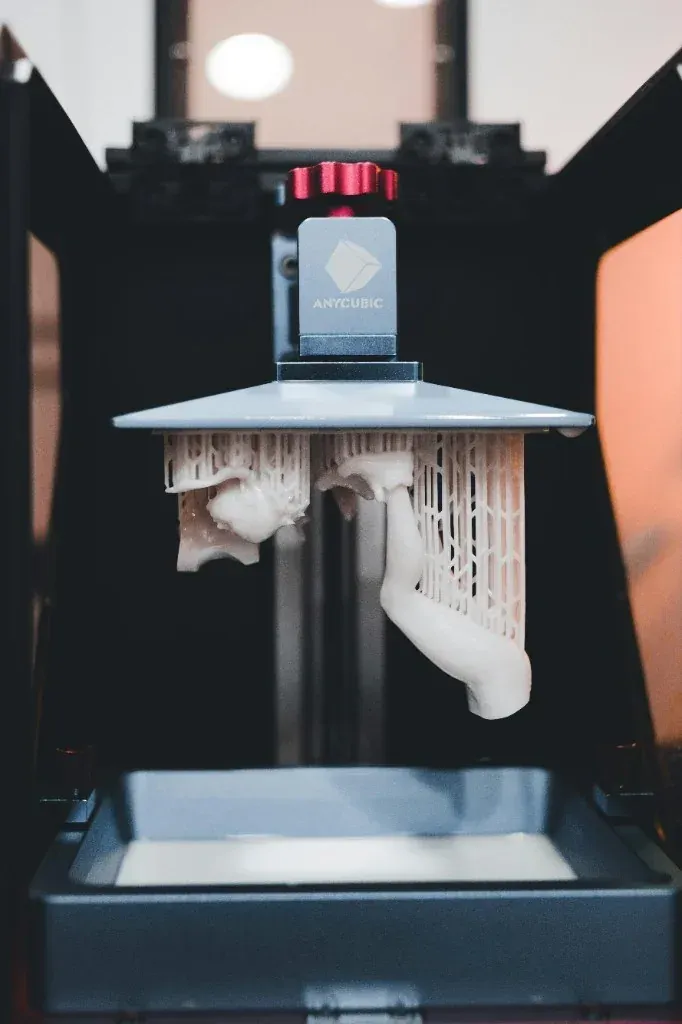
| A smooth, detailed look for photos or investors | SLA resin | Fine detail and a surface that paints well |
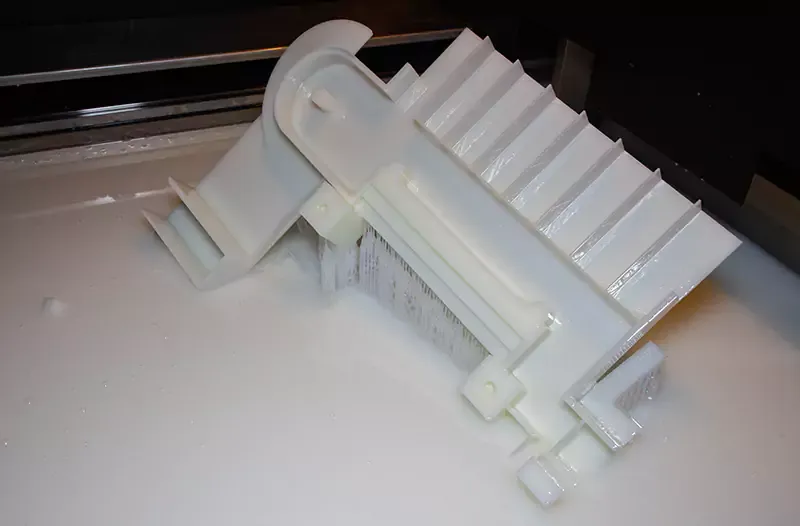
| Strong parts with clips, hinges or screws | SLS nylon | Tough and slightly flexible, like moulded plastic |
| A flexible part such as a grip or seal | TPU | Rubber-like and bendable |
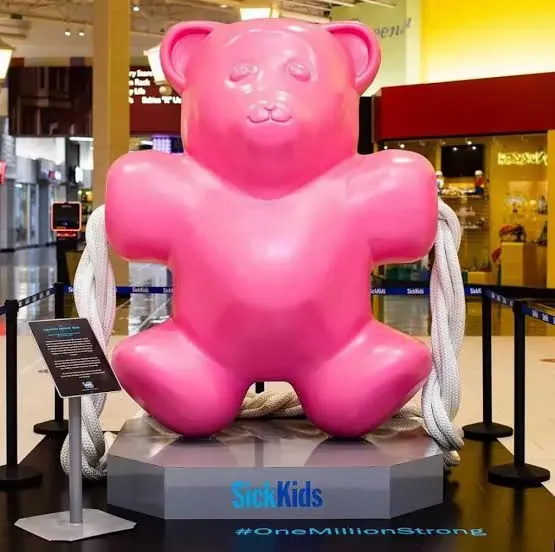
| A large part, up to full size | Large-format FDM in sections | Printed in pieces and joined invisibly |
For plastics, see PLA vs ABS vs PETG vs TPU; for large parts, see large format 3D printing.
Step 5: Order the first prototype
Send the file, the quantity, the colour, what the prototype must prove and your deadline. Ask for the simplest version that answers your question. A first prototype that costs little and arrives in a few days is worth more than a perfect one that arrives in a month.
Step 6: Test it properly
Give the prototype to real users and watch them, without explaining it first. Check the fit with anything it must connect to. Write down every problem, with photos. If the product will live in a car, outdoors or near a window in the UAE or Saudi summer, test it in the heat as well.
Step 7: Improve and repeat
Change the 3D file, give it a new version number and print again. Group the changes so each round is worth printing. Most products need two to four rounds. The product prototyping process explains the stages in more detail.
Step 8: Prepare for production
When the design stops changing, check it for manufacturing and decide the quantity. Up to around a hundred parts, 3D printing or casting is usually the most economical. For thousands, injection moulding is cheaper once the mould is paid for. See 3D printing vs injection moulding.
Protecting your idea
Ask any supplier to sign an NDA before you send files; we sign them as standard. Keep dated copies of your sketches and each file version. If you plan to patent the product, speak to a registered IP adviser early. In the UAE, patents are filed with the Ministry of Economy, and in Saudi Arabia with the Saudi Authority for Intellectual Property (SAIP).
What it costs
A simple first prototype is the lowest cost step of the whole project. The main costs come from 3D modelling, painted finishes and the number of rounds. Our guide to how much a prototype costs in Dubai gives budget bands for each type.
Where we work
We make prototypes for start-ups, product designers and engineering teams across the UAE and Saudi Arabia. Files are quoted online, so you do not need to visit us, and finished prototypes are delivered across the UAE and shipped to Saudi Arabia.
- Prototyping in Dubai, including Dubai Silicon Oasis, Dubai Internet City, d3, Dubai Science Park and Jebel Ali
- Prototyping in Abu Dhabi, including Masdar City, KEZAD and Mussafah
- Prototypes in Sharjah, including SRTI Park, and in Ajman and Ras Al Khaimah
- Prototyping in Riyadh
- Prototypes in Jeddah
- Prototypes in Dammam, Khobar and Dhahran
How ALCA Models can help
ALCA Models makes prototypes for product designers, engineers and start-ups across the UAE and Saudi Arabia, from quick proof-of-concept prints to painted presentation prototypes.
- Rapid prototyping: concept, functional and presentation prototypes, usually in days
- 3D printing in SLA resin, SLS nylon and FDM, chosen for what the prototype must prove
- 3D scanning and reverse engineering when the prototype must fit an existing part
Frequently asked questions
Can I make a prototype without CAD skills?
Yes. Send a sketch with dimensions, a drawing or an existing object, and the 3D model can be made for you before printing.
How long does it take to get my first prototype?
Once the 3D file is ready, a simple single-part prototype usually takes 2 to 4 working days.
Do I need a patent before making a prototype?
Not necessarily. Many inventors prototype first, under an NDA, to check the idea works, and then speak to an IP adviser. Take advice early if you plan to file.
Can you make a prototype from a photo?
A photo alone is not enough for an accurate part. We need dimensions, a drawing or the object itself, which we can 3D scan.
Start your prototype
Send your sketch, drawing or 3D file and tell us what the prototype needs to prove. We will suggest the simplest way to get there, with a price and a date. See rapid prototyping in Dubai.