
Key points
- PLA is easy to print and accurate, but softens at around 60 °C, so it is a poor choice for a hot car or outdoor use in the UAE.
- ABS and ASA handle heat better; ASA also resists sunlight, which suits outdoor parts.
- PETG is tough and moisture resistant, a good all-round engineering plastic.
- TPU is flexible and rubber-like, used for seals, grips and bumpers.
The plastics at a glance
| Plastic | Strengths | Weaknesses | Typical use |
|---|---|---|---|
| PLA | Easy to print, accurate, good surface, made from plant sources | Softens around 60 °C, brittle | Concept models, display pieces, indoor parts |
| ABS | Tougher, handles heat better, can be smoothed | Warps while printing, needs ventilation | Housings, functional parts, enclosures |
| ASA | Like ABS with strong UV resistance | Similar printing difficulty to ABS | Outdoor parts, signage, parts in sunlight |
| PETG | Tough, chemical and moisture resistant | Can string, less stiff than PLA | Functional parts, containers, brackets |
| TPU | Flexible, impact absorbing, wear resistant | Slow to print, less precise | Seals, gaskets, grips, protective covers |
PLA: the default for models
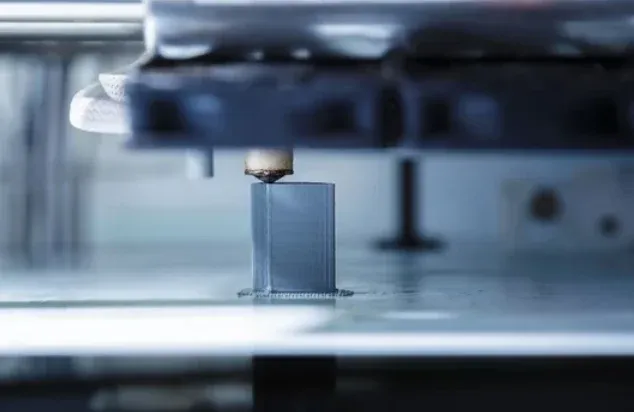
PLA (polylactic acid) is the most common 3D printing plastic. It prints accurately with a clean surface and little warping, which makes it the usual choice for concept models, display pieces and large prints. Its weakness is heat: it starts to soften at around 60 °C. A PLA part left in a car or in direct sun in a UAE summer can deform.
ABS and ASA: for heat and sun
ABS is tougher and handles higher temperatures, which is why it is used for housings and functional parts. ASA is closely related but resists ultraviolet light, so it keeps its colour and strength outdoors. For parts that will sit in the sun, ASA is usually the better filament choice.
PETG: the practical all-rounder
PETG combines toughness with good resistance to moisture and many chemicals. It is a reliable choice for brackets, clips, containers and parts that will be handled.
TPU: when the part must flex
TPU is an elastic plastic that bends and returns to shape. It is used for seals, grips, bumpers and protective parts. It prints more slowly and is less precise than rigid plastics.
When to choose resin or nylon instead
Filament plastics are economical and suit large parts. For fine detail and smooth surfaces, resin (SLA) is better; for strong, heat-tolerant functional parts, nylon (SLS) is often the best choice. See our 3D printing materials guide.
How ALCA Models can help
ALCA Models recommends the material for each job based on where the part will be used, including heat and sun exposure in the UAE, and prints in filament, resin and nylon.
- 3D printing in PLA, PETG, ABS, ASA, TPU, resin and nylon
- Rapid prototyping with the right material for testing
- Display models and product replicas finished for long-term public use
Frequently asked questions
Is PLA or PETG stronger?
PLA is stiffer, PETG is tougher. PETG bends before it breaks and handles impact and moisture better, so it is usually preferred for functional parts.
Which 3D printing plastic is best for outdoor use in the UAE?
ASA, because it resists UV light and handles heat better than PLA. For demanding parts, nylon (SLS) is also a good option.
Will a PLA part melt in a car?
It can deform. PLA softens around 60 °C, and a closed car in a UAE summer gets hotter than that.
What is TPU used for?
Flexible parts such as seals, gaskets, grips, bumpers and protective covers.
Not sure which plastic to use?
Tell us where the part will be used, how hot it gets and what it has to withstand, and we will recommend the material. See 3D printing in Dubai.