
Key points
- SLA uses liquid resin for the finest detail and smoothest surfaces.
- SLS uses nylon powder for strong, functional parts with no support marks.
- FDM uses plastic filaments such as PLA and ABS for economical, larger parts.
- Choose the material by how the part will be used: visual, functional, outdoor or display.
The three main 3D printing technologies
| Technology | Material | Best for | Surface | Strength |
|---|---|---|---|---|
| SLA (stereolithography) | Photopolymer resins | Detailed models, facades, figurines, visual prototypes | Very smooth | Medium |
| SLS (selective laser sintering) | Nylon PA12 / PA11, composites | Functional parts, snap fits, small batches | Slightly grainy | High |
| FDM (fused deposition) | PLA, ABS, PETG and more | Large parts, early prototypes, enclosures | Visible layers | Medium to high |
Resin (SLA): when detail matters most
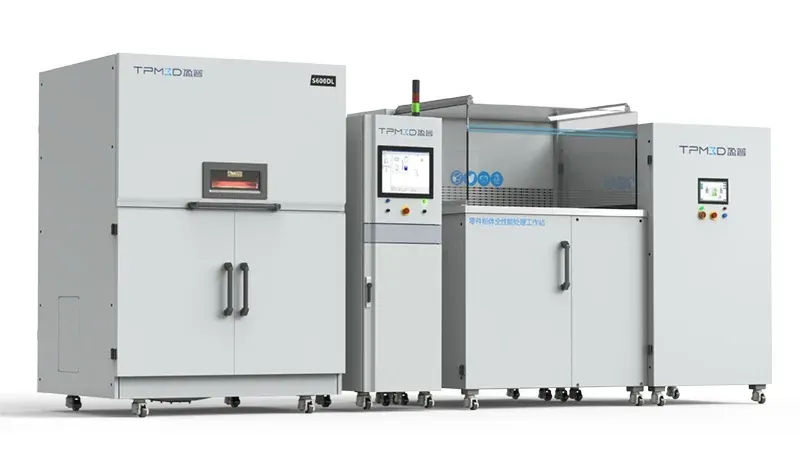
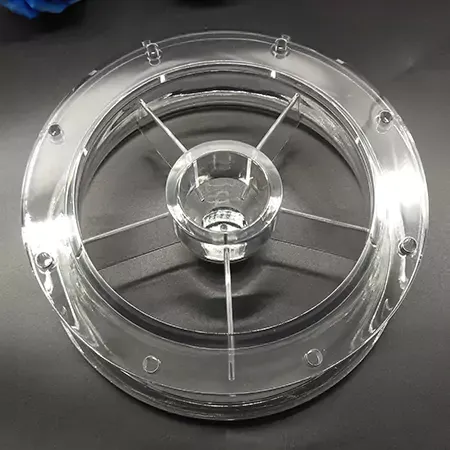
SLA cures liquid resin layer by layer with a light source. It produces the sharpest details and the smoothest surfaces of the three, which is why we use it for architectural facades, small figures and presentation prototypes. Standard resins are ideal for visual parts; tough and engineering resins add strength, and clear resins can be polished for transparent parts.
Nylon (SLS): strong and functional
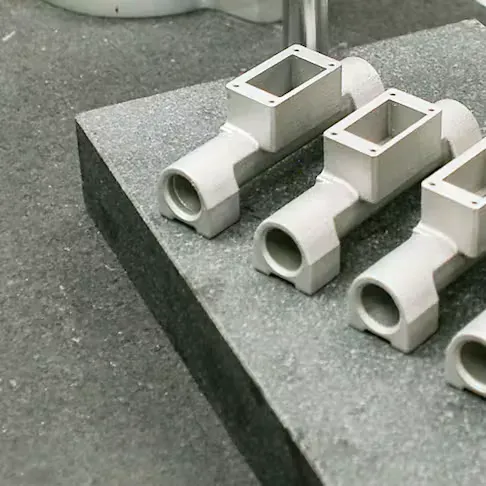
SLS fuses nylon powder with a laser. Because the surrounding powder supports the part, complex shapes and moving assemblies can be printed without support marks. Nylon parts are strong and slightly flexible, so SLS suits functional prototypes, brackets, housings and small production runs.
PLA and ABS (FDM): economical and large
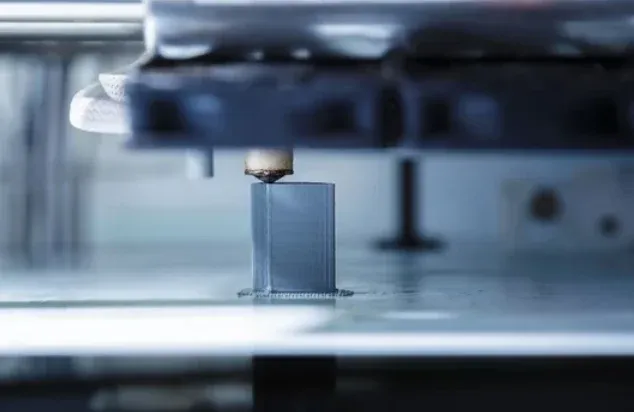
FDM melts a plastic filament and lays it down line by line. It is the most economical option for large parts, quick concept checks and internal structures of models. PLA is easy to print and finish; ABS and PETG handle more heat and impact.
How to choose the right material
- Presentation model or display piece: SLA resin, sanded and painted
- Functional prototype or fit test: SLS nylon or tough resin
- Large structure or early concept: FDM in PLA or ABS
- Outdoor or heat exposure: ask about UV- and heat-resistant materials, or fibreglass for large sculptures
- Transparent parts: clear resin, polished
Most professional models combine several technologies. A typical architectural model might use SLA facades, an FDM or laser-cut core and hand-finished landscaping. See how we use them on our technologies page and 3D printing services.
Frequently asked questions
What is the strongest 3D printing material?
For our range, SLS nylon and engineering resins give the best strength. Composite nylons add stiffness.
What is the best material for architectural models?
SLA resin for detailed parts, combined with laser-cut acrylic or MDF and hand finishing.
SLA vs FDM: which is better?
SLA is better for detail and smooth surfaces; FDM is better value for large and simple parts.
Can 3D printed parts be painted?
Yes. Parts are sanded and primed first, then painted to any colour or finish.
Not sure which material to choose?
Send us your file and tell us how the part will be used. We will recommend the right technology and material, and explain the cost difference. You can also read about 3D printing prices in Dubai.