
Key points
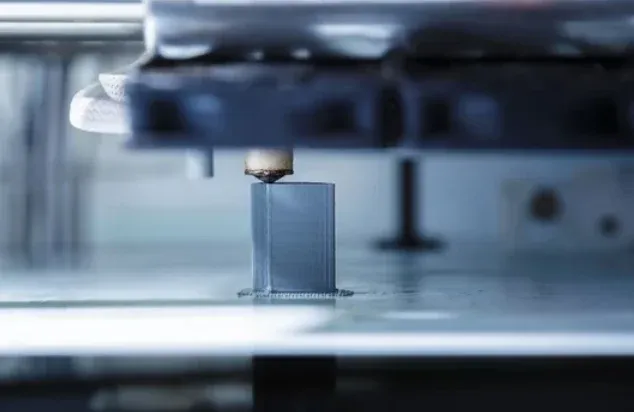
- FDM melts plastic filament and deposits it through a nozzle, layer by layer.
- It is the most economical process and suits large parts and quick form checks.
- Layer lines are visible; sanding and painting give a smooth presentation finish.
- Parts are weaker between layers, so print orientation affects strength.
How FDM works
A spool of plastic filament feeds into a heated nozzle. The printer moves the nozzle to draw the outline and fill of each layer, then raises it and draws the next layer on top. Overhangs need temporary supports, which are removed after printing. The process is also known as FFF, fused filament fabrication.
Settings that change the result
| Setting | Effect |
|---|---|
| Layer height | Thinner layers give smoother surfaces but take longer |
| Infill | The internal pattern; more infill means stronger, heavier and slower parts |
| Wall thickness | Thicker outer walls add strength and allow sanding |
| Orientation | Decides where layer lines fall and which direction is weakest |
Strength and orientation
An FDM part is strongest along its layers and weakest between them, like plywood. A bracket printed on its side can be much stronger than the same bracket printed standing up. For functional parts, orientation is chosen around the loads the part will carry.
Large-format FDM
FDM can print parts far larger than resin or powder machines, and very large objects are printed in sections and joined. This is used for display pieces, oversized product replicas, signage, mock-ups and parts of large models. See rapid prototyping.
Materials
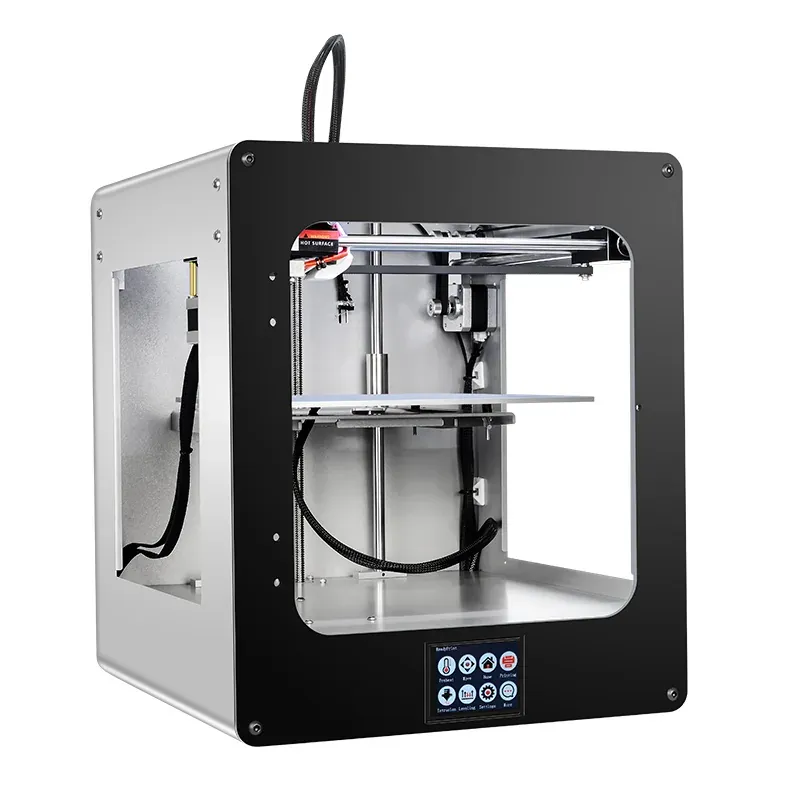
Common FDM materials are PLA, PETG, ABS, ASA and TPU, each with different strength, flexibility and heat resistance. In the UAE climate, heat matters: see PLA vs ABS vs PETG vs TPU.
When to choose FDM
- Early concept models and form checks
- Large parts and display pieces
- Jigs, fixtures and simple functional parts
- Parts that will be painted for presentation
- Projects where cost matters more than fine detail
How ALCA Models can help
ALCA Models uses FDM for large and economical prints, and finishes them by sanding and painting when they need to look their best.
- 3D printing of large parts printed in sections
- Display models and product replicas, including oversized product replicas
- Concept models for quick form checks
Frequently asked questions
What does FDM stand for?
Fused deposition modelling. It is also called FFF, fused filament fabrication.
Why are there lines on FDM prints?
They are the individual layers. Thinner layers reduce them, and sanding and painting remove them for presentation parts.
Is FDM strong enough for functional parts?
Often yes, with the right material, infill and orientation. For high strength or complex shapes, SLS nylon is usually better.
What is the largest part FDM can print?
Single prints are limited by the printer's build size, but large objects are printed in sections and joined.
Planning a large or low-cost print?
Send us your file and tell us the size and how the part will be used. We will recommend FDM or another process. See 3D printing in Dubai.