
Key points
- Prototyping is a loop: build, test, learn, change and repeat, with each round answering one question.
- The usual stages are brief, CAD, proof of concept, looks-like, works-like, testing and pre-production.
- Early rounds should be fast and cheap; spend on finish and accuracy once the design is settled.
- Writing down what each prototype must prove keeps the project on time and on budget.
The prototyping loop
Every stage follows the same loop. Define the question, build the simplest prototype that answers it, test it with real people or real parts, then change the design. A typical consumer or industrial product goes round this loop several times before the design is frozen. The stages below are the order in which the questions usually come up.
| Stage | Question it answers | Typical method | Typical time |
|---|---|---|---|
| 1. Brief | What must the product do, for whom, where? | Written requirements | Days |
| 2. Sketch and CAD | What exactly are we making? | 3D CAD model (STEP) | 1 to 2 weeks |
| 3. Proof of concept | Does the core idea work at all? | Quick FDM print, rough assembly | 2 to 4 working days |
| 4. Looks-like prototype | Does it look and feel right? | SLA resin, sanded and painted | 7 to 10 working days |
| 5. Works-like prototype | Does it fit, move and survive use? | SLS nylon or tough resin | 5 to 8 working days per round |
| 6. Testing and iteration | What must change? | User and function tests, CAD changes | Ongoing |
| 7. Pre-production | Is it ready to manufacture? | Design for manufacturing, pilot batch | 1 to 3 weeks |
Stage 1: Define the brief
Write one page before any CAD work: what problem the product solves, who uses it, the size limits, the must-have features, the target cost and the expected quantity. Include the environment. In the UAE and Saudi Arabia that often means heat: a part left in a car in summer, or used outdoors in direct sun, needs a different material from one that lives in an office.
Stage 2: Sketches and CAD
Sketches settle the idea; CAD makes it buildable. A 3D CAD model, ideally exported as a STEP file, is what every later stage is built from. If the product must fit an existing part, the existing part can be 3D scanned or reverse engineered into CAD first. Our guide to CAD software for 3D printing covers the main tools.
Stage 3: Proof of concept
The proof of concept is deliberately rough. A quick FDM print, off-the-shelf screws and springs, sometimes tape. Its only job is to show that the core idea works. Spending on finish here is wasted money, because the design will change.
Stage 4: Looks-like prototype
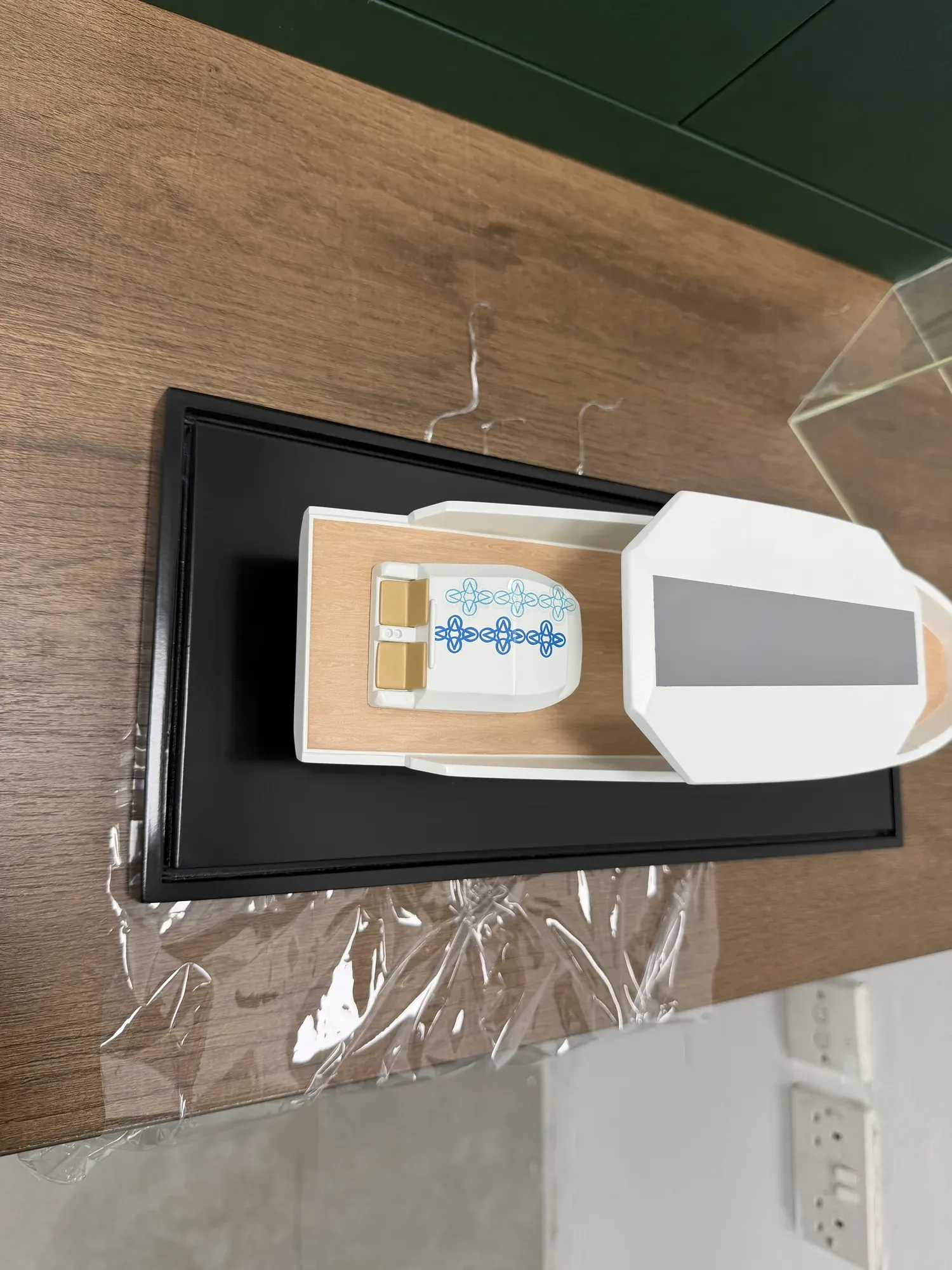
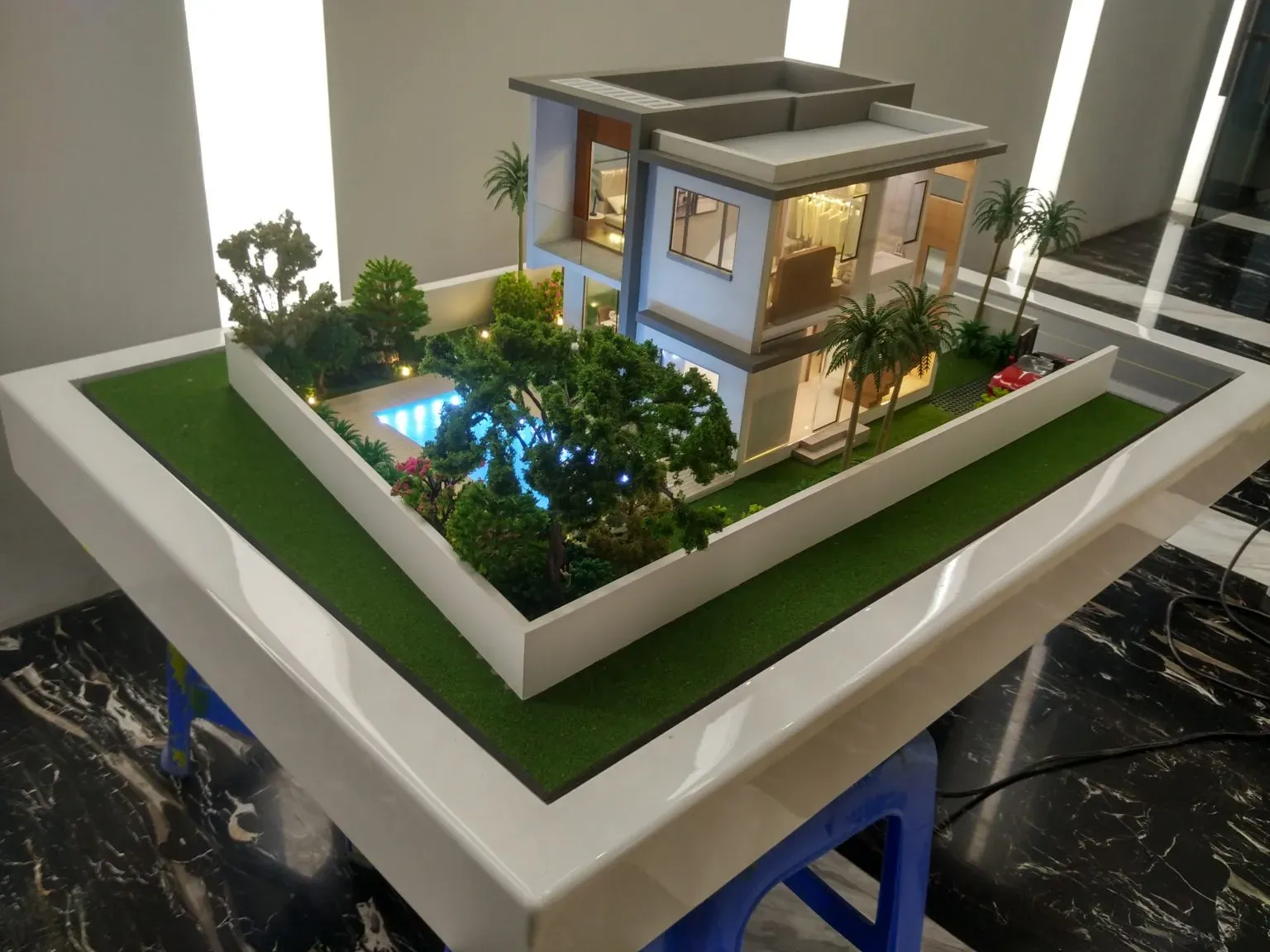
Once the idea works, the looks-like prototype shows what the product will be. It is usually printed in SLA resin, then sanded, primed and painted to match the renders. It is used for stakeholder reviews, user feedback on size and grip, photography and investor meetings. It does not need to work inside.
Stage 5: Works-like prototype
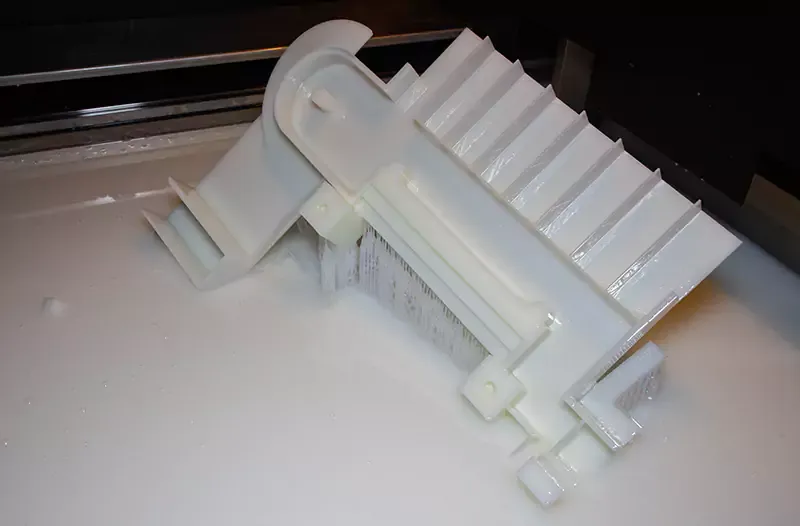
The works-like prototype tests function: clips that snap, hinges that turn, screw bosses that hold, housings that close around electronics. SLS nylon is the usual choice because it is strong and slightly flexible, like many moulded plastics. Expect more than one round: the first works-like prototype almost always shows something to fix.
Stage 6: Testing and iteration
Test one thing at a time and write the result down. Typical tests are fit with mating parts, assembly by someone who has not seen the product before, a drop from table height, heat exposure and real use by target users. Give every CAD version a number, and mark the printed parts with it, so test notes always refer to the right version.
Stage 7: Pre-production and low-volume parts
Before tooling, the design is checked for manufacturing: even wall thickness, draft angles for moulding, and tolerances the factory can hold. A pilot batch of 10 to 100 parts, 3D printed or cast, lets you test the product with real users before committing to a mould. Our guide to 3D printing vs injection moulding explains when to switch.
Common mistakes
- Going to a high-finish prototype before the design is settled.
- Testing too many things with one prototype, so the result is unclear.
- No version control, so nobody knows which print a comment refers to.
- Ignoring the manufacturing method until the end, then redesigning for it.
- Forgetting the Gulf climate: heat and UV change how plastics behave.
Where we work
We make prototypes for start-ups, product designers and engineering teams across the UAE and Saudi Arabia. Files are quoted online, so you do not need to visit us, and finished prototypes are delivered across the UAE and shipped to Saudi Arabia.
- Prototyping in Dubai, including Dubai Silicon Oasis, Dubai Internet City, d3, Dubai Science Park and Jebel Ali
- Prototyping in Abu Dhabi, including Masdar City, KEZAD and Mussafah
- Prototypes in Sharjah, including SRTI Park, and in Ajman and Ras Al Khaimah
- Prototyping in Riyadh
- Prototypes in Jeddah
- Prototypes in Dammam, Khobar and Dhahran
How ALCA Models can help
ALCA Models makes prototypes for product designers, engineers and start-ups across the UAE and Saudi Arabia, from quick proof-of-concept prints to painted presentation prototypes.
- Rapid prototyping: concept, functional and presentation prototypes, usually in days
- 3D printing in SLA resin, SLS nylon and FDM, chosen for what the prototype must prove
- 3D scanning and reverse engineering when the prototype must fit an existing part
Frequently asked questions
How many prototype rounds does a product need?
Most products need two to four rounds. Products with moving parts or electronics often need more.
How long does the prototyping process take?
A simple product can go from CAD to a finished looks-like prototype in about two weeks. A full process with several works-like rounds usually takes one to three months, depending on testing.
Can you help with the CAD design?
Yes. We can model the part from sketches, drawings or an existing object; this is quoted separately.
What is the difference between a looks-like and a works-like prototype?
A looks-like prototype shows the final appearance but does not need to work. A works-like prototype tests fit and function and may not look finished.
Plan your prototype
Send your brief, sketch or CAD file and tell us which stage you are at. We will suggest the next prototype, the process and a price. See rapid prototyping in Dubai or read how much a prototype costs.