
Key points
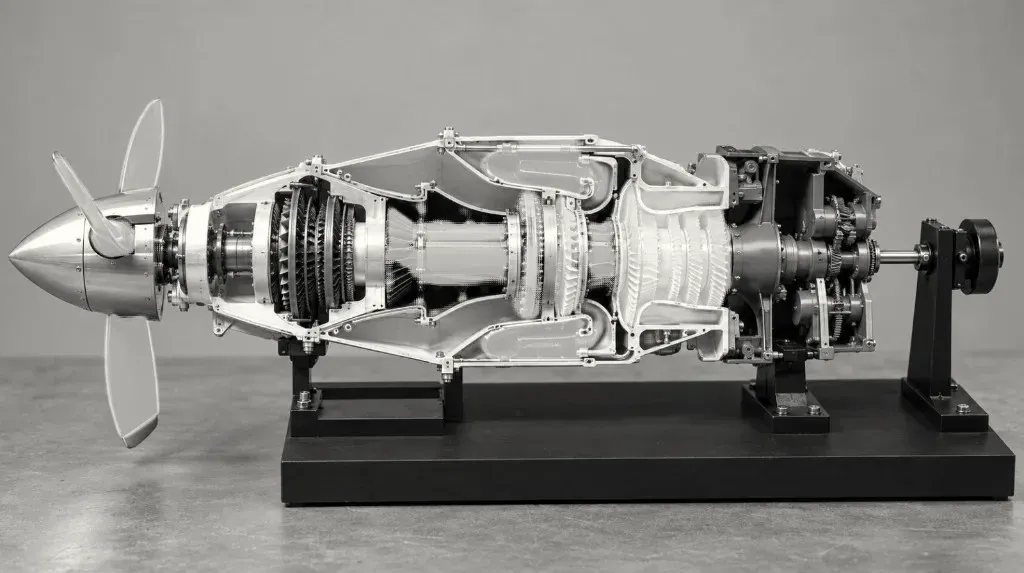
- A mockup is a non-working copy of a product that matches its appearance.
- Common uses are launches, photography and video, retail displays, exhibition stands, packaging tests and investor meetings.
- Mockups are usually SLA or FDM 3D printed, then sanded, painted and detailed to match the final colours.
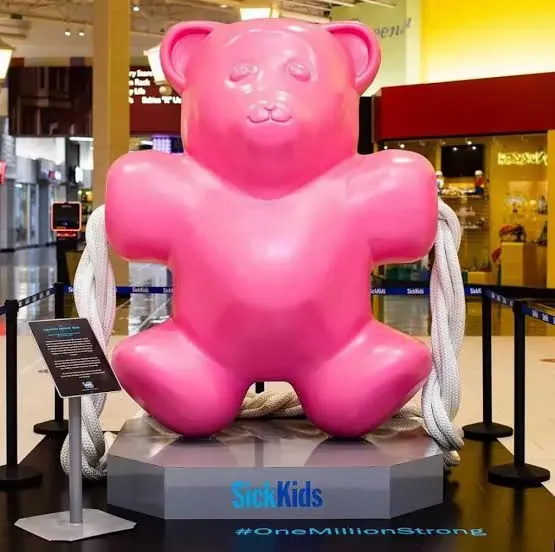
- Oversized mockups are printed in sections and joined, so size is rarely a limit.
Mockup, prototype or replica?
| Term | What it is | Typical use |
|---|---|---|
| Mockup | Looks like the product, does not work | Launches, photography, displays, packaging tests |
| Prototype | Tests the appearance or function of a product in development | Design reviews, user and function testing |
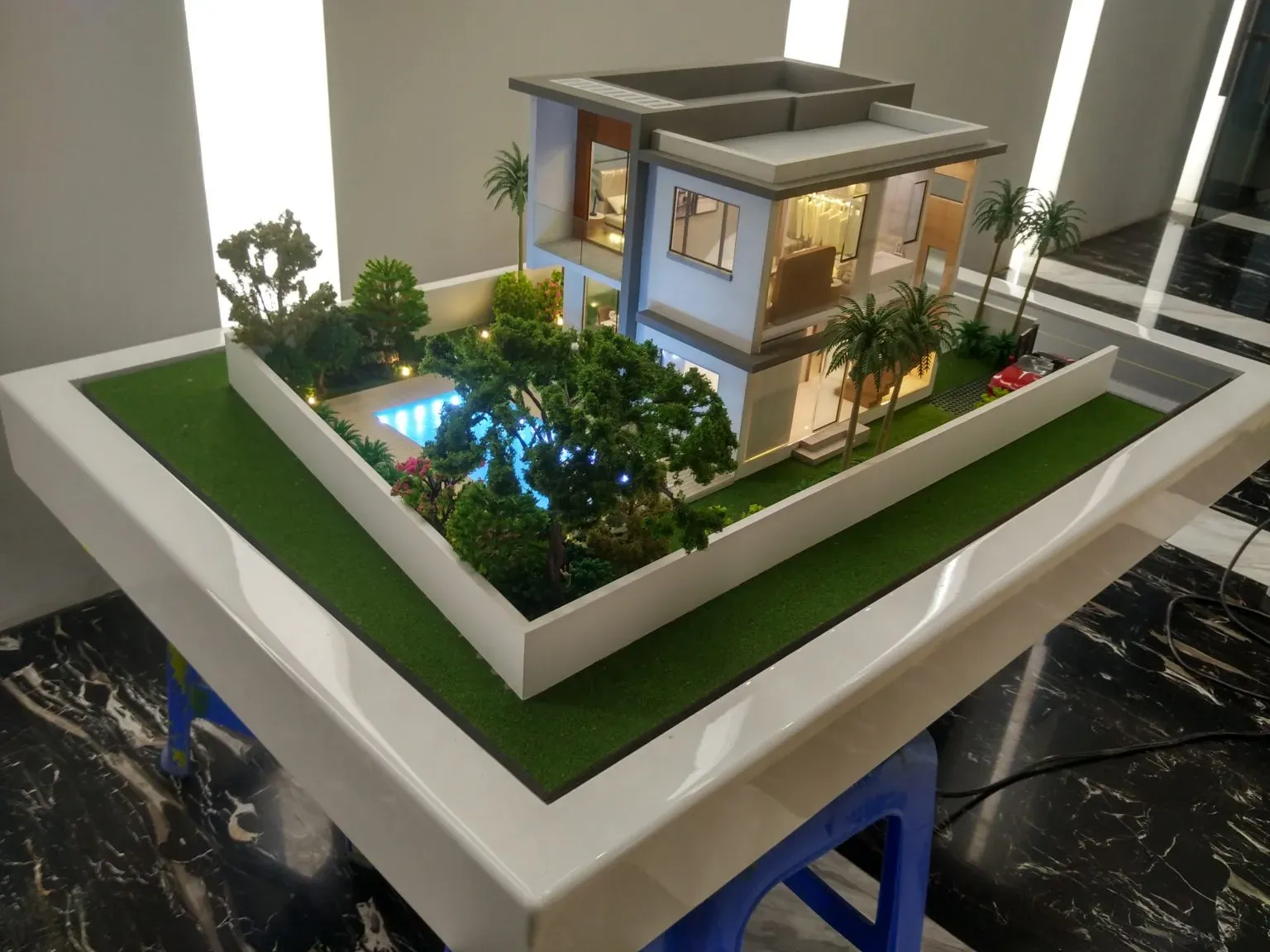
| Replica | A copy of an existing product, often at a different scale | Exhibitions, retail, showrooms |
The same methods are used for all three. The difference is what the object has to do. Our guide to what a prototype is covers the development side.
When a mockup makes sense
- Before production: launch photos, videos and pre-orders while tooling is still being made.
- Retail and window displays: dummy products that are safe to leave out, do not fade like packaging and cannot be stolen for value.
- Exhibition stands: no stock to ship or insure, and an oversized hero product visitors see from the aisle.
- Packaging and shelf tests: check how the product sits in its box and on the shelf.
- Investor and client meetings: a finished object makes the product real.
- Film, TV and photo shoots: lightweight props that look like the real thing.
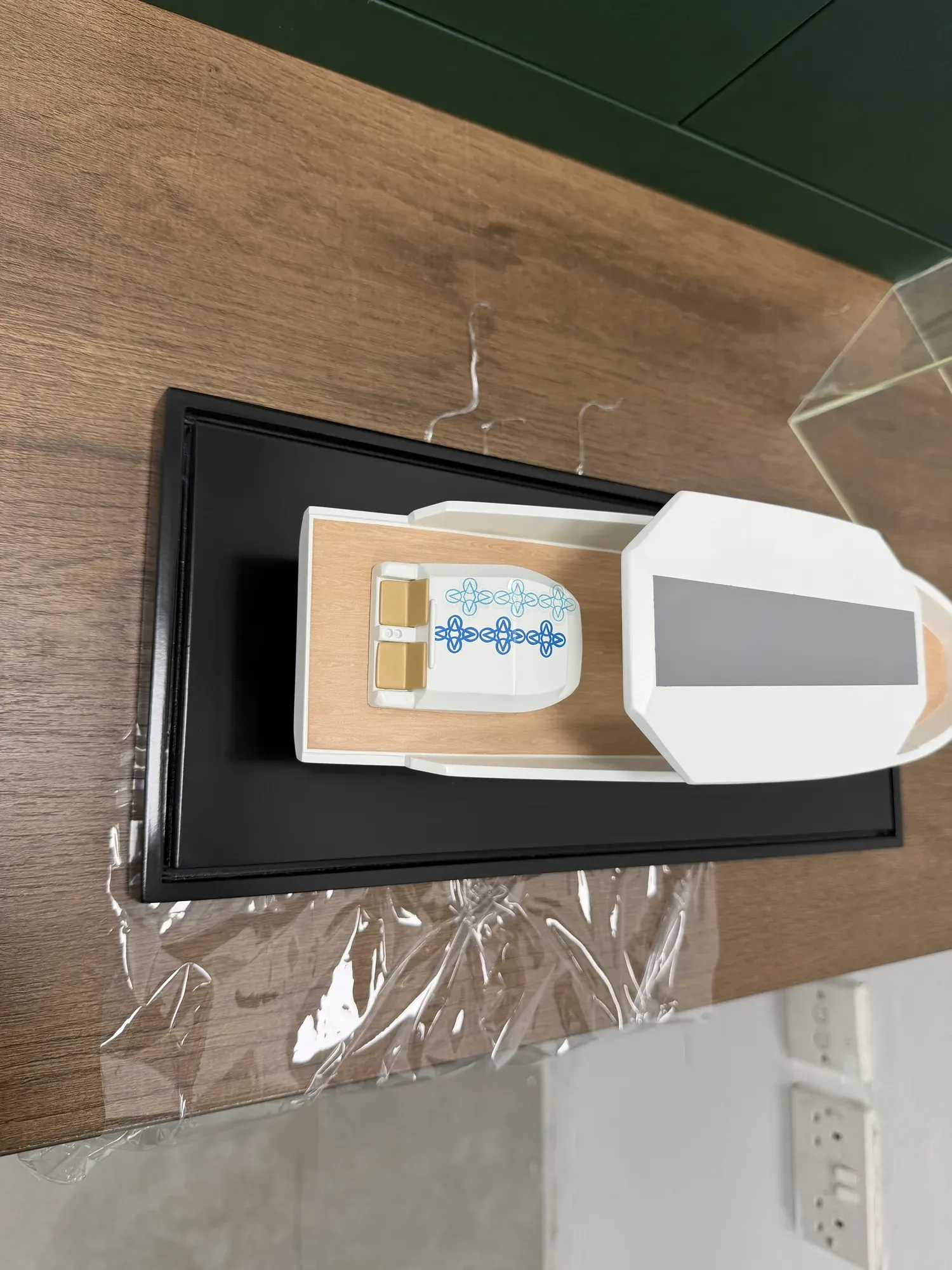
How a product mockup is made
- 3D file: from your CAD model, or from a 3D scan of a sample or competitor product.
- Printing: SLA resin for small, detailed products; FDM for larger or oversized pieces, printed in sections.
- Finishing: filling, sanding and priming until no layer lines show.
- Colour and texture: painted to your colour references, with gloss, matt, metallic or soft-touch effects.
- Graphics: logos, labels and screen images applied as prints, decals or backlit panels.
- Assembly and base: parts joined, fixed to a display base and fitted with a cover if needed.
A typical painted mockup takes 7 to 10 working days. Oversized mockups usually take one to three weeks, depending on size and finish.
Getting colours and finishes right
Send colour references (Pantone or RAL codes), and a physical sample if you have one, because screens show colour differently. Say which surfaces are gloss and which are matt. Chrome and brushed metal looks are made with special paints; clear parts such as lenses are printed in clear resin and polished. For brand-critical colours, ask for a small painted sample first.
Mockups for roll-outs and roadshows
Brands often need the same mockup in several places at once: launch events, mall activations and partner stores in Dubai, Abu Dhabi, Riyadh and Jeddah. Once the first piece is approved, copies can be printed and finished to the same standard. For dozens of identical pieces, casting from a master can be more economical.
Where we work
We make product mockups and replicas for brands, agencies and manufacturers across the UAE and Saudi Arabia.
- Product mockups in Dubai
- Mockups and replicas in Abu Dhabi
- Mockups in Sharjah
- Product mockups in Riyadh
- Mockups in Jeddah
- Mockups in Dammam and Khobar
How ALCA Models can help
- Display models and product replicas for retail, launches and exhibitions
- Large format 3D printing for oversized mockups
- Rapid prototyping when the mockup also needs to be tested
Frequently asked questions
Can a mockup have working lights or a screen image?
Yes. Simple LED lighting and printed or backlit screen graphics can be built in.
How accurate is a mockup?
From a CAD file, the shape matches the design exactly. Colour is matched to your references, and we recommend a painted sample for critical brand colours.
Can you make a mockup bigger than the real product?
Yes. Oversized mockups are printed in sections and joined, so the joints do not show on the finished piece.
How many copies can you make?
From a single piece to small batches. For larger numbers, casting from a 3D printed master is usually more economical.
Get a mockup quote
Send your CAD file or a sample, your colour references, the size and the date of your launch or shoot, and we will reply with a price and a programme.