
Key points
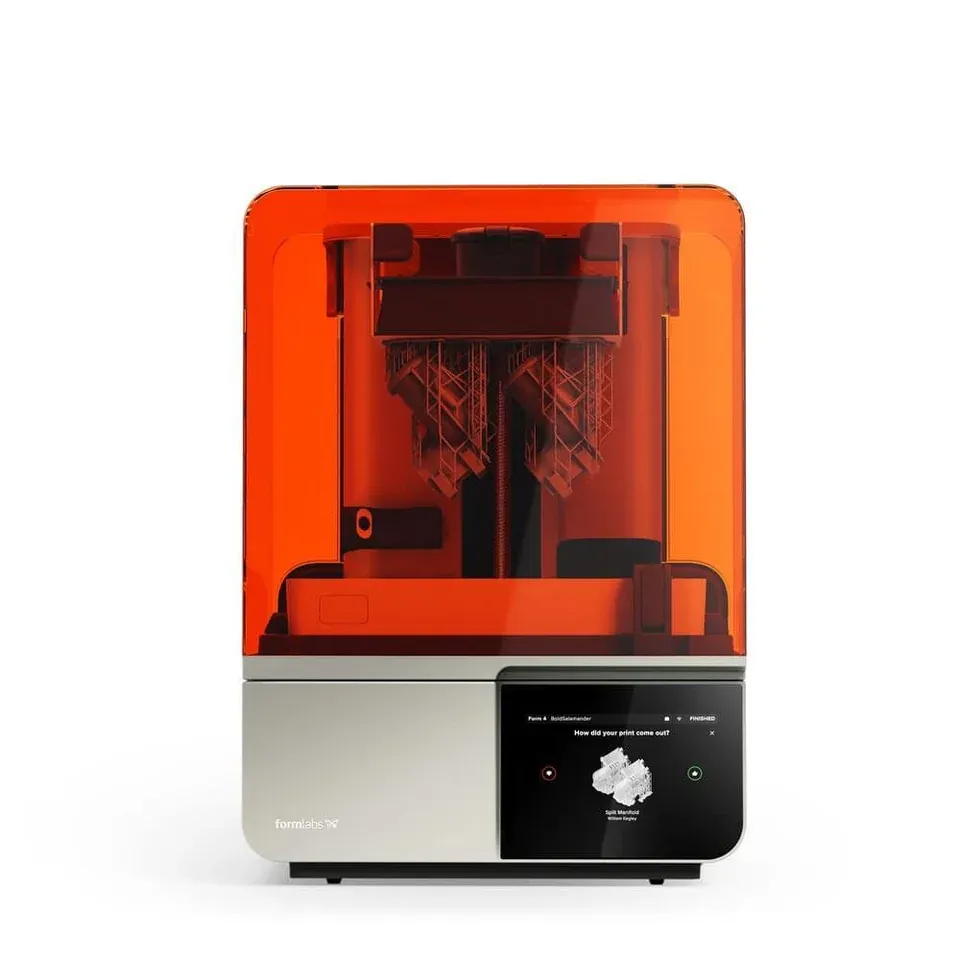
- SLA cures liquid resin with an ultraviolet laser, layer by layer; DLP and LCD printers do the same with a projector or screen.
- Resin parts have very fine detail and smooth surfaces, ideal for models and presentation prototypes.
- Parts need supports, washing and UV post-curing after printing.
- Standard resins are brittle and can yellow in sunlight; engineering resins are tougher.
How resin printing works
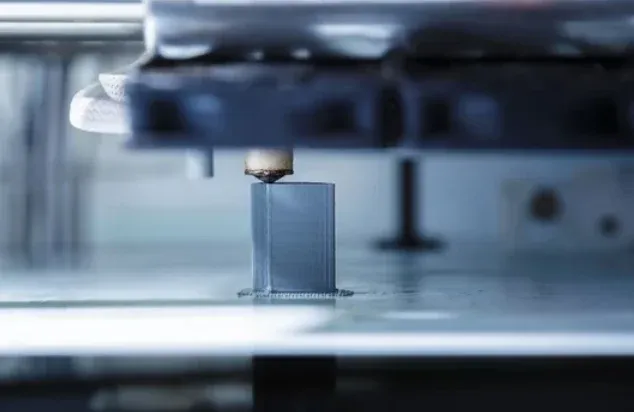
A build platform dips into a tank of liquid photopolymer resin. Ultraviolet light hardens a thin layer in the shape of the part's cross-section, the platform moves, and the next layer is cured on top. In SLA (stereolithography) a laser draws each layer; in DLP a projector flashes the whole layer at once; in LCD (also called MSLA) a screen masks the light.
After printing: supports, washing and curing
- Supports: thin structures hold the part during printing and are removed afterwards, leaving small marks that are sanded away
- Washing: uncured resin is washed off in alcohol or a cleaning solution
- Post-curing: UV light and heat complete the curing so the part reaches its full strength
- Finishing: sanding, priming and painting for presentation parts
Types of resin
| Resin | Properties | Used for |
|---|---|---|
| Standard | Fine detail, smooth, fairly brittle | Models, façades, display pieces |
| Tough or durable | Impact resistant, closer to ABS or polypropylene | Functional prototypes, snap fits |
| Clear | Transparent after polishing | Light pipes, lenses, flow visualisation |
| Flexible and elastic | Rubber-like | Seals, soft-touch parts |
| High temperature | Resists heat | Moulds, hot-air and fluid parts |
| Castable | Burns out cleanly | Jewellery and metal casting patterns |
Strengths and limits
Resin is the best choice when detail and surface finish matter: architectural façades, small-scale figures, product appearance models and master patterns for moulds. Its limits are size, since resin printers have smaller build areas, and durability: standard resin can be brittle and may yellow or weaken in strong sunlight unless it is painted or coated.
In architectural model making, resin printing is used for the fine parts of a building, while larger elements are laser cut or printed by other methods. See 3D printed architectural scale models.
Resin, nylon or filament?
Choose resin for detail, nylon (SLS) for strength, and filament (FDM) for large, economical parts. Our 3D printing materials guide compares them side by side.
How ALCA Models can help
ALCA Models uses resin printing wherever detail and surface quality matter most: building façades, figures, product appearance models and trophies.
- 3D printed architectural scale models with resin-printed details
- Presentation prototypes sanded and painted to a final look
- Custom 3D printed trophies and awards
Frequently asked questions
What is the difference between SLA and DLP?
Both cure liquid resin with light. SLA draws each layer with a laser; DLP projects the whole layer at once. Results are similar; the choice depends on the printer.
Is resin 3D printing better than filament?
For fine detail and smooth surfaces, yes. For large parts and low cost, filament (FDM) is usually better.
Are resin prints strong?
Standard resin is fairly brittle. Tough and engineering resins are much stronger and suit functional prototypes.
Can resin parts be used outdoors?
Standard resin can yellow and weaken in strong sunlight. Painting or coating helps, or another material can be chosen.
Need detailed resin parts?
Send us your file and tell us the size, detail and finish you need. We will recommend the resin and quote. See 3D printing in Dubai.