
Key points
- The Dubai 3D Printing Strategy, launched in April 2016, aims for 25% of Dubai's buildings to be based on 3D printing technology by 2030.
- Dubai built one of the first 3D printed office buildings in 2016 and, in 2019, what was announced as the world's largest 3D printed building.
- Dubai Municipality issued its first construction licence for a privately owned 3D printed villa in 2023.
- The cost of a 3D printed house depends far more on design, finishes and services than on the printing itself.
The Dubai 3D Printing Strategy
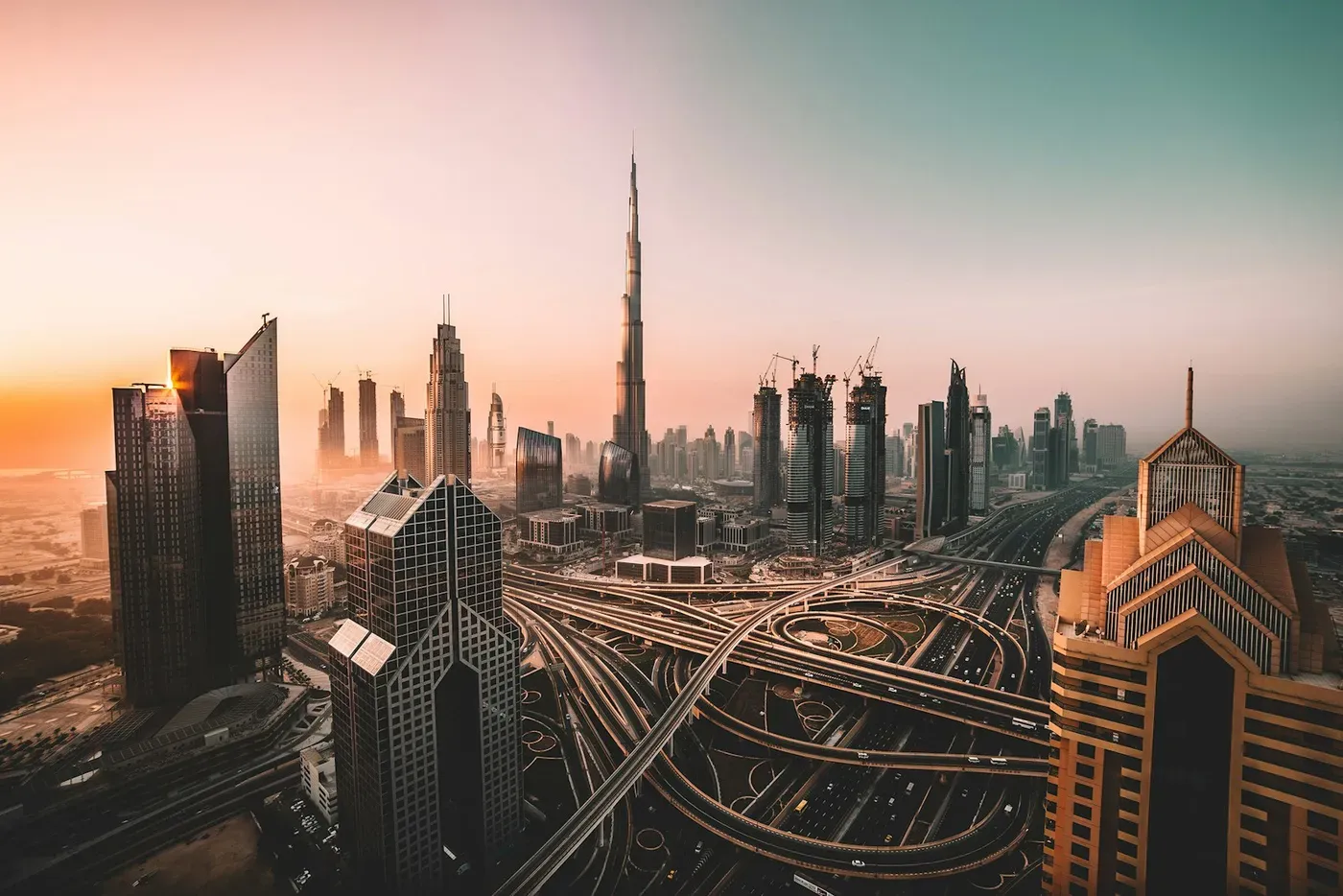
In April 2016 Dubai launched its 3D Printing Strategy with a headline goal: that 25% of buildings in Dubai would be based on 3D printing technology by 2030. The strategy covers construction, medical products and consumer products, and is implemented with partners including Dubai Municipality. At launch, its projections spoke of large savings in construction time, labour and cost.
Landmark projects
| Year | Project | Why it matters |
|---|---|---|
| 2016 | Office of the Future | One of the world's first 3D printed office buildings, a symbol of the strategy |
| 2019 | Two-storey building announced as the world's largest 3D printed building | Printed on site in about two weeks, showing the method at building scale |
| 2023 | First construction licence for a private 3D printed villa | Moved 3D printing from showcase projects towards homes |
How a 3D printed building is made
Construction printers extrude a cement-based mix layer by layer to form the walls, either on site or as panels in a factory that are then assembled. Foundations, roofs, windows, services and finishes are still built in the usual way. The printed part is mainly the structure and walls.
What does a 3D printed house cost?
There is no single price. Printing the walls can save time and labour, but the walls are only one part of a house. The total cost still depends on:
- Design and engineering, including approvals
- Foundations, roof and structure
- Windows, doors, MEP services and finishes
- Site access for the printer and logistics
- Whether walls are printed on site or as panels
For now, many 3D printed buildings are chosen as much for speed, design freedom and innovation as for lower cost.
3D printing in architecture beyond construction
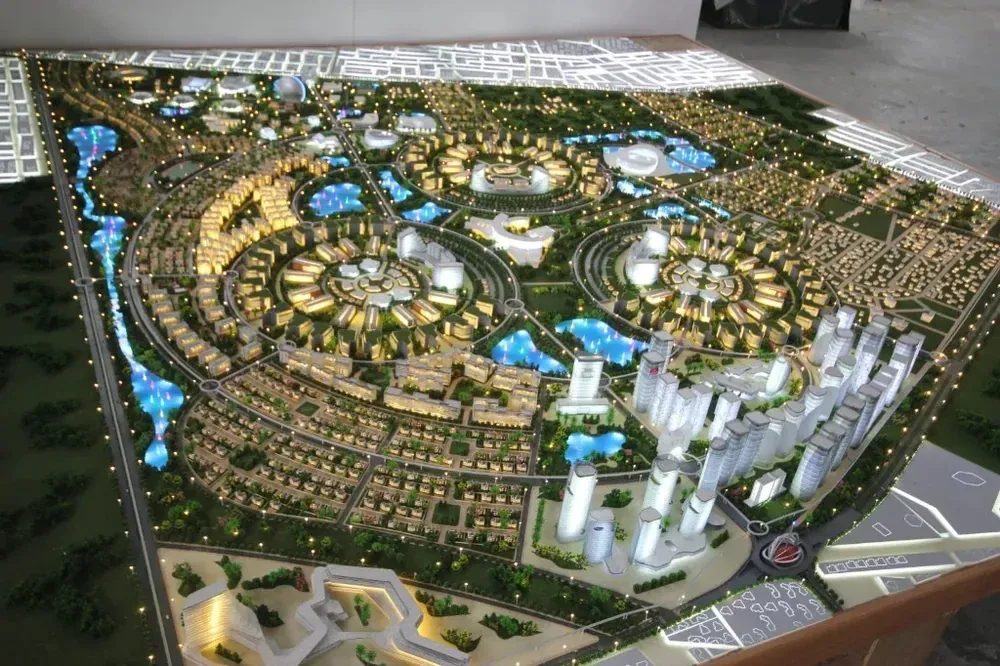
Long before buildings were printed at full size, architects were using 3D printing for scale models. Façades, complex roofs and whole districts are printed at 1:100 to 1:1000 to present designs to clients and authorities. See 3D printed architectural scale models and architectural models.
How ALCA Models can help
ALCA Models does not print full-size buildings. We make the scale models that architects and developers use to present buildings and master plans, often with 3D printed façades and details.
- 3D printed architectural scale models
- Architectural and master plan models for approvals and presentations
- Real estate sales centre models and sales centre pieces
Frequently asked questions
What is the Dubai 3D Printing Strategy?
A strategy launched in April 2016 to make Dubai a hub for 3D printing, with a goal of 25% of buildings based on 3D printing technology by 2030.
Can you build a 3D printed house in Dubai?
Yes. Dubai Municipality issued its first construction licence for a private 3D printed villa in 2023. Projects follow the normal approvals process.
Is a 3D printed house cheaper?
The printed walls can save time and labour, but the total cost depends mostly on design, structure, services and finishes.
Does ALCA Models print buildings?
No. We 3D print scale models of buildings and developments for presentation, not full-size buildings.
Presenting a building design?
We make 3D printed architectural scale models of buildings and master plans for developers and architects. Send us your drawings for a quote. See architectural models.